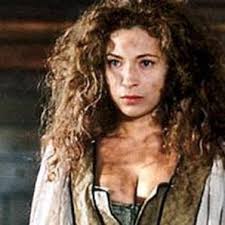
Welcome readers! In my first blog post, I am going to draw out the ironic aspects of Moll Flanders (1722) and explore the different ways in which Daniel Defoe employs it throughout the novel.
Moll Flanders is such a rich text, and it is widely considered to be one of the first novels in English literature. [2] As a result, it is often easy to overlook less obvious aspects of the novel, for example the irony that is littered through the narrative. Essentially, the novel “rests upon a complicity and a duplicity”. [3] I have chosen to explore this concept to highlight the underlying, but by no means less important, aspects of the novel.
David Blewett’s introduction provides us with a thorough exploration of the ‘duplicity’ that is carefully crafted by Defoe; the character of Moll deceives herself, the characters and the reader through her life of pretence. One example of this is in section 3, where Moll Flanders and her second husband (the linen-draper) take a trip to Oxford and pretend to be members of the nobility: “The servants all call’d him my Lord… and I was her Honour, the Countess” (page 43). This is ironic because her behaviour is incongruent to her true character; she is undermining herself as she is presenting herself in a manner that is simply not real. It could perhaps be argued that this section in the novel could reflect Defoe’s own aspirations to climb up the social ladder again after becoming bankrupt in 1692. [4]
Another example of irony is when Moll enchants the Oxford dons. She says, “we diverted our-selves with bantering several other poor Scholars, with hopes of being at least his Lordship’s Chaplains'” (p.105-6). The use of the verb ‘bantering’ displays their clear enjoyment in their deception. Irony is established in this section through Moll’s ability to deceive the upper-class Oxford dons, despite being a members of the lower class. Could this could foreshadow her social mobility at the end of the novel?
I found it interesting that that the protagonist is also the narrator of the novel, creating duplicity within the novel. The narrator is aware of the outcome, whilst the protagonist is blissfully unaware. In this sense, two Moll’s are created – “the young sinner and the old penitent”. [5]
Irony comes in many forms, and Daniel Defoe is versatile in his use of it. For example, Defoe creates a situation that is similar to dramatic irony, as the reader knows more than the protagonist. We can predict Moll’s downfall despite her minor triumphs, through crime, can’t we? We cannot be deceived. However, Moll fails to see this, creating a sense of ‘complicity’. [6] We are not fooled by the young, naïve sinner who believes her crimes will lead her to an improved position within society.
Bibliography
[1] Alex Kingston as Moll Flanders in the ITV production, 1996, accessed 28th October 2018. https://www.theguardian.com/books/2011/jun/24/life-moll-flanders-sian-rees-review
[2] Moll Flanders, Good Reads, accessed on 29th October 2018. https://www.goodreads.com/book/show/38262.Moll_Flanders
[3] Introduction by David Blewett in Moll Flanders (Penguin Classics) 1989, page 19.
[4] Timeless advice: Daniel Defoe and small business management, accessed 30th October 2018. https://www.emeraldinsight.com/doi/abs/10.1108/00251740510634886?mbSc=1&fullSc=1&fullSc=1&fullSc=1&fullSc=1&fullSc=1&fullSc=1&journalCode=md
[5] Introduction by David Blewett in Moll Flanders (Penguin Classics) 1989, page 19.
[6] Introduction by David Blewett in Moll Flanders (Penguin Classics) 1989, page 19.
 Prison Voices
Leave a comment