Charles Dickens’ Oliver Twist expresses the struggles of many people in the Victorian period, especially in the major cities such as London. Life was extremely difficult for the poor; many orphans were left no choice but to be sent to the
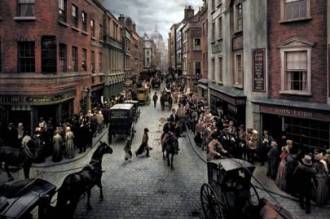
As these young criminals needed to be deceptive and manipulative, they had to pick (no pun intended!) their acquaintances carefully and wisely. Like in Oliver Twist, Oliver is taken in by the characters of Fagin and The Artful Dodger, as they plan to ‘train’ him to become an effective pickpocket. Before doing so, they use a certain type of criminal language, called Flash language, to gage whether Oliver is ‘one of them’. This Flash language is a sort of code, whereby only these ‘criminals’ can understand what is being said, meaning they can find their own kind more quickly and effectively.
Oliver’s first encounter with The Artful Dodger is the most poignant example of Flash language adopted by the criminals of London. This was significant to figure out whether they were communicating with a fellow criminal or not, ultimately gaging if they can trust them. The first sentence The Artful Dodger says to Oliver is “Hullo, my covey! What’s the row?” [2] Dodger misjudges the situation when he sees Oliver is begging on the street, assuming he will understand the criminal language and adopts him as a fellow “covey”. Dodger soon realises that Oliver is not an ‘established’ criminal and he exclaims, “My eyes, how green!” [3] The use of “green” suggests the naivety and innocence of Oliver. Dodger views this as a triumph because he now has the opportunity to inform Fagin, who will be able to groom Oliver to become a pickpocket, as he is an impressionable young boy.

Bibliography
[1] ‘Walk Charles Dickens’ London’, accessed on 10th December 2018. https://www.cntraveller.com/article/best-dickens-walks-london
[2] Dickens, Charles. Oliver Twist. Wordsworth Editions Limited. Hertfordshire. 2000. Page 49
[3] Dickens, Charles. Oliver Twist. Wordsworth Editions Limited. Hertfordshire. 2000. Page 49
[3] When Oliver meets The Artful Dodger, 10th December 2017, accessed on 9th December 2018. https://www.tes.com/teaching-resource/oliver-twist-extract-analysis-when-oliver-meets-the-artful-dodger-11792510
 Prison Voices
Leave a comment