Prisoner memoirs were often used in order to obtain the authentic voice of the prisoner, as they were seen as the criminal’s honest reflections on their prison experiences. However, how truly authentic were they? There are certainly factors that may have impacted on the reliability of a prisoner memoir. In this blog post I will be exploring the possible affect of ulterior motives alongside leading questions when making a judgement on the authenticity of a prisoner memoir.
Firstly, it is difficult to decide on the agenda of the prisoner. As discussed in my previous blog post (click HERE to check it out!), they may have presented their experiences in a certain way for a particular reason. For example, Frederick Brocklehurst, imprisoned for “addressing the people on social and labour questions in a secluded part of Boggart Clough”(1), was clearly a political individual and therefore may have had his own political motives that came into play when writing his prisoner memoir. Brocklehurst was imprisoned shortly after the change in regime for dealing with criminals; moral reform and rehabilitation was replaced with a more harsh method of punishment and deterrence after the 1850s, meaning that Brocklehurst experienced this latter, harsher punishment technique.
Under the Hard Bed, Hard Fare, Hard Labour regime (1865), hammocks were replaced with much less comfortable wooden board beds. Prisoners were also given a “deliberately monotonous diet, with exactly the same food on the same day of each week” (2). Frederick Brocklehurst’s descriptive account of his time in prison, referencing the “iron door” and the “limited contact with a outside world” (3) highlights his disapproval of the new regime, as it seemed inhumane and unhygienic. When reflecting on the reason why Brocklehurst was imprisoned, it seems to me likely that he was preaching for a return to the more humane, and arguably more effective treatment of criminals that was thought to rehabilitate criminals. It could be argued that the ‘harsh’ regime of dealing with prisoners was not successful at all. These ‘life stories’ were also used to help support prison reform. This is reinforced with the ‘letters’ from grateful former inmates thanking the prison for this reform. Again, there was a motive behind this; to show how brutal and isolated imprisonment was a success.
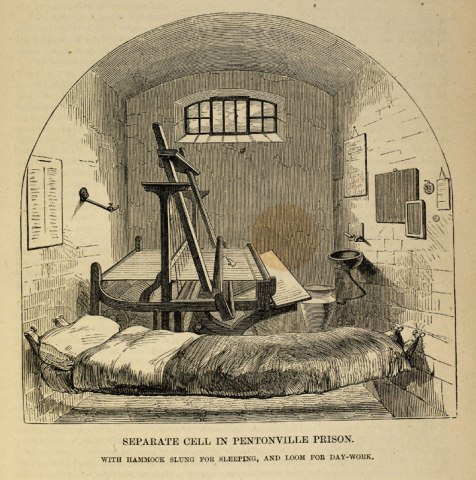
Brocklehurst invites the reader to ‘imagine’ the prison, attempting to engage and persuasively encourage them to disagree with the new regime as it is described unfavourably throughout his memoir.
Another factor that may have impacted upon the authenticity of prisoner memoirs is leading questions. Rev. H. S. Joseph claimed in the preface of his Memoirs of Convicted Criminals, that ‘the statements of the different prisoners were narrated without any alteration’ (4). He is positive that the memoirs genuinely reflect the prisoner’s lives and their rehabilitation. While this may be true, it glosses over the fact that prisoners were asked leading questions when creating their ‘memoirs’. This meant the Chaplain could lead their memoirs in a desired direction. For instance, Schur states that the narratives were “structed around the set of questions that inmates writers learnt from their encounters with prison officials”. (5) For example, “When did you last attend church, do you know how to pray, did you ever see your mother pray” (5). Therefore it could be suggested that these narratives were not fully genuine, and were in fact merely centred around a set of questions. It is possible that prisoners were merely being trained in penitence discourse? Were ‘reformed’ prisoners just repeating and imitating their teachers, to appear fully rehabilitated for a quick release?
Florence Maybrick’s memoir, ‘Mrs. Maybrick’s Own Story: My Fifteen Lost Years’, emphasises the negative impact of imprisonment and isolation. Maybrick was convicted for the murder of her husband James Maybrick in 1889. There was a public outcry following her sentencing, as it was not fully clear that the arsenic administered to her husband was the actual cause of his death. In her prison memoir, she described the light that “struggled in dimly through a dirty, barred window” and the “terrible oppression that weighed [her] down” (6). This passage emphasises the dismal conditions of the prison through the listing of adjectives, “dimly” and “dirty”, which highlights the cruelty of the prison reform, and it certainly seems restrictive and inhumane with the “barred” window.
As there was a doubt whether Maybrick should have actually been imprisoned for murder, her case was already popular. The lengthy trial and subsequent fifteen years imprisonment of Florence Maybrick “constituted an international sensation which received thorough newspaper coverage in England and America (7). This means she already had a large following to make a political move in her memoir upon release if she had the political desire to. The alliteration of ‘dimly’ and ‘dirty’ creates a grim impression of her treatment, and the suggestion that she may not have been deserving of this treatment makes the regime appear even more cruel. Her case “inspired three books by advocates of legal reform” (7). It is clear that there are many things to consider, and research is essential before deciding whether a prisoner memoir is authentic or not.
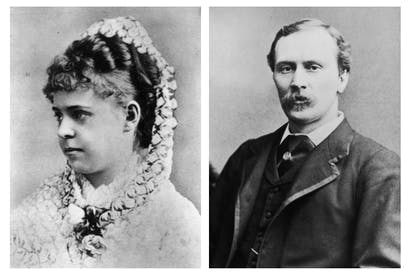
After Maybrick was released from prison, fifteen years later, she decided to join public debates around her case and she then published her autobiography, i.e. memoir. With this publication, Maybrick, “inaugurated a distinctly female, modern tradition of prison autobiography , calling for reform of the legal and prison systems and engaging with the media’s role in representing criminal cases”. (8) Perhaps Florence Maybrick was truly shocked at the treatment she faced during her time in prison and this encouraged and motivated her to work and preach for reform upon her release. However, it could be argued that this was her intention all along; Maybrick disagreed with the prison reform and took advantage of her time in prison to describe and present her experiences in a horrific description of the prison conditions. Once again, this just shows that a researcher can never be fully confident that the prisoner memoir is reliable and honest and therefore we should be careful about using them for educational purposes.
Overall, I think a lot of memoirs are not as authentic as they appear to be. Some memoirs may be subjugated to promote and congratulate a particular reform, and some may be subjugated to present the reform in a negative light. It is virtually impossible to establish the agenda of each prisoner, making them very subjective.
Bibliography
Primary sources
(3) Preface, Frederick Brocklehurst, I Was in Prison (London: T. Fisher Unwin, 1898), page 3
(4) Rev H. S. Joseph’s Memoirs of Convicted Criminals, preface pp. 18
(5) Schur, Anna, “The Poetics of ‘Pattern Penitence’: ‘Pet Prisoners’ and Plagiarized Selves,” in Stones of Law, Bricks of Shame: Narrating Imprisonment in the Victorian Age, ed. Jan Alber and Frank Lauterbach (Toronto, 2009), 139.
(6) ‘Mrs. Maybrick’s Own Story: My Fifteen Lost Years’, ‘Alone’, pp. 21
Secondary sources
(1) I was in Prison. By F. Brocklehurst, archive.spectator.co.uk/article/3rd-december-1898/30/i-was-in-prison-by-f-brocklehurst-t-fisher-unwin, accessed on 9th January 2019
(2) Why were Victorian prisons so tough? http://www.nationalarchives.gov.uk/education/resources/victorian-prison/ accessed on 9th January 2019
(7) “Wasnt She the Downright Villain”: The Autobiography of Florence Elizabeth Maybrick, Joseph C. Voelker, James Joyce Quarterly, Vol. 14, No. 4 (Summer, 1977), pp. 480
(8) Anne Schwan, ‘Adultery, Gender, and the Nation: The Florence Maybrick Case and Mrs. Maybrick’s own Story’, Convict Voices: Women, Class, and Writing about Prison in Nineteenth-Century England (Durham: University of New Hampshire Press, 2014), pp. 125
 Prison Voices
Leave a comment